3rd planet from the Sun
Earth
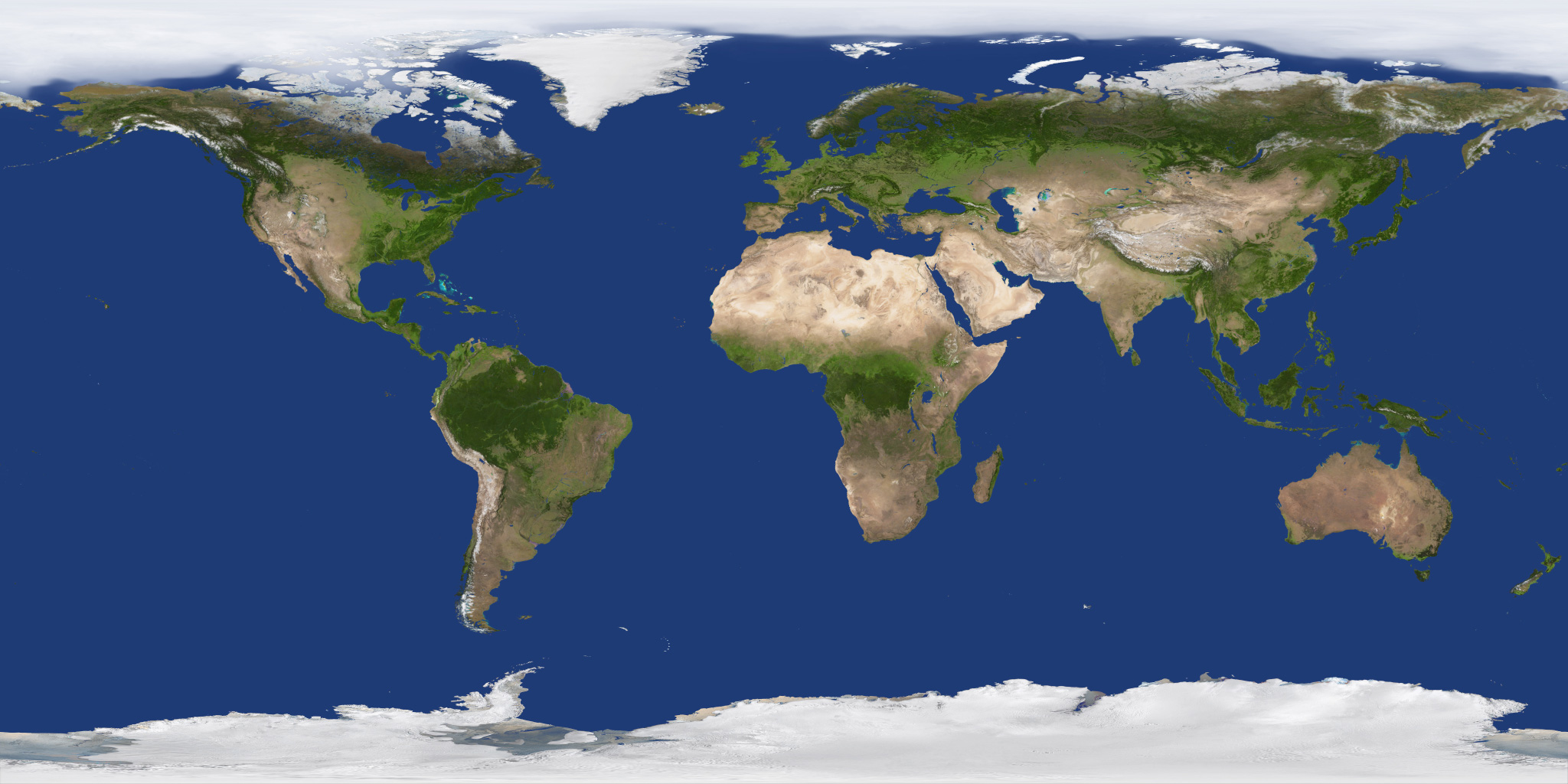
A blue dot suspended in space: Earth is the only place in the universe where we know for certain that life exists. Oceans covering 71% of its surface, a breathable atmosphere and a protective magnetic field make it a cosmic oasis in delicate balance.
- Diameter
- 12,756 km
- Distance from Sun
- 149.6 M km
- Orbital period
- 365.25 days
- Day length
- 23h 56m
- Moons
- 1
- Average temp.
- 15 °C
A one-of-a-kind planet
Earth is the largest of the rocky planets and the only one with stable liquid water on its surface: oceans cover 71% of it and regulate the climate of the whole planet. The atmosphere — 78% nitrogen and 21% oxygen — filters harmful radiation and maintains an average temperature of 15 °C, ideal for life.
Beneath our feet, Earth is geologically alive: plate tectonics continuously recycles the crust, while the molten iron outer core generates the magnetic field that deflects the solar wind. Without this invisible shield, the atmosphere would slowly be stripped away, as happened to Mars.
The Moon, a precious companion
The Moon orbits 384,400 km away, an exceptionally large satellite relative to its planet: 3,474 km in diameter, more than a quarter of Earth's. According to the leading hypothesis it was born 4.5 billion years ago from the debris of an impact between the early Earth and a Mars-sized body called Theia.
The Moon is more than a night-time spectacle: its gravity stabilises the tilt of Earth's axis at around 23.4°, guaranteeing regular seasons over millions of years, and drives the tides that shaped our coastlines and may even have helped life emerge in intertidal zones.
A never-ending race
Even when we feel perfectly still, we are travelling at dizzying speeds: Earth spins at 1,670 km/h at the equator, races along its orbit around the Sun at 107,000 km/h and, together with the whole Solar System, orbits the centre of the Milky Way at roughly 828,000 km/h.
Earth's orbit is not a perfect circle: its distance from the Sun varies between 147.1 million km at perihelion (early January) and 152.1 million km at aphelion (early July). The seasons, however, are caused not by this variation but by the tilt of the rotation axis.
The only moon of Earth
Earth has one confirmed natural satellite, officially named by the International Astronomical Union.
- Moon
Frequently asked questions
Why is Earth the only habitable planet?
It's a combination of factors: the right distance from the Sun for liquid water, an atmosphere dense enough to hold heat without overheating, a magnetic field that shields against radiation, and a Moon that stabilises its axis. No other known planet combines them all.
How far is the Moon from Earth?
On average 384,400 km: light takes 1.3 seconds to cover the distance. It is however growing by about 3.8 cm per year, because the tides slowly transfer energy from Earth's rotation to the Moon's orbit.
How fast does Earth move through space?
Earth orbits the Sun at about 107,000 km/h, nearly 30 km per second, covering roughly 940 million km in a year. We don't feel this speed because it is constant: everything around us, atmosphere included, travels along with us.
Watch the whole Solar System in motion
Real orbits, moons and speeds rebuilt from NASA/JPL data, right in your browser. Free, nothing to install.
Launch the 3D simulation